
For quick answers to specific questions, see our Sleep FAQ
Sleep. For parents of toddlers and preschoolers, it can feel like the holy grail—elusive, precious, and desperately sought after. If you’re wondering how much sleep your 2- to 4-year-old actually needs, struggling with bedtime battles, or trying to navigate the transition away from naps, you’re not alone.
This comprehensive guide will help you understand your child’s changing sleep needs, create healthy sleep habits, and troubleshoot common challenges. By the end, you’ll have the knowledge and tools to help your little one (and yourself) get the rest everyone needs.
Understanding Sleep Needs by Age: The Science Behind Rest
Sleep isn’t just about feeling rested—it’s crucial for your child’s physical growth, brain development, emotional regulation, and immune system function. But sleep needs change significantly during the toddler and preschooler years.
The 2-Year-Old: Transitioning Sleep Patterns
At age 2, your child is in a major developmental transition. Their sleep needs are:
Total Sleep Required: 11-14 hours in a 24-hour period Typical Pattern: 10-12 hours at night + 1-3 hour afternoon nap Bedtime Range: 7:00-8:30 PM Wake Time: 6:30-7:30 AM
Two-year-olds still need that afternoon nap to function well. Without it, you’ll likely see increased tantrums, difficulty with emotional regulation, and early evening meltdowns. The nap helps bridge them to a reasonable bedtime without becoming overtired.
The 3-Year-Old: The Nap Transition Zone
Three-year-olds are often in transition regarding naps—some still need them, others are beginning to outgrow them:
Total Sleep Required: 10-13 hours in a 24-hour period Typical Patterns:
- Still napping: 10-11 hours at night + 1-2 hour nap
- No longer napping: 11-13 hours at night Bedtime Range: 7:00-8:00 PM (may be earlier if no nap) Wake Time: 6:30-7:30 AM
This is often when parents notice their child fighting the nap or taking much longer to fall asleep at night after napping. Trust your child’s cues and be flexible during this transition.
The 4-Year-Old: Independent Sleepers
Most 4-year-olds have transitioned away from naps and rely entirely on nighttime sleep:
Total Sleep Required: 10-13 hours in a 24-hour period Typical Pattern: 10-13 hours of nighttime sleep Bedtime Range: 7:00-8:30 PM Wake Time: 6:30-7:30 AM
Four-year-olds often develop more sophisticated sleep routines and may enjoy the independence of their bedtime ritual, though they still need parental guidance and consistency.
Creating the Perfect Sleep Environment
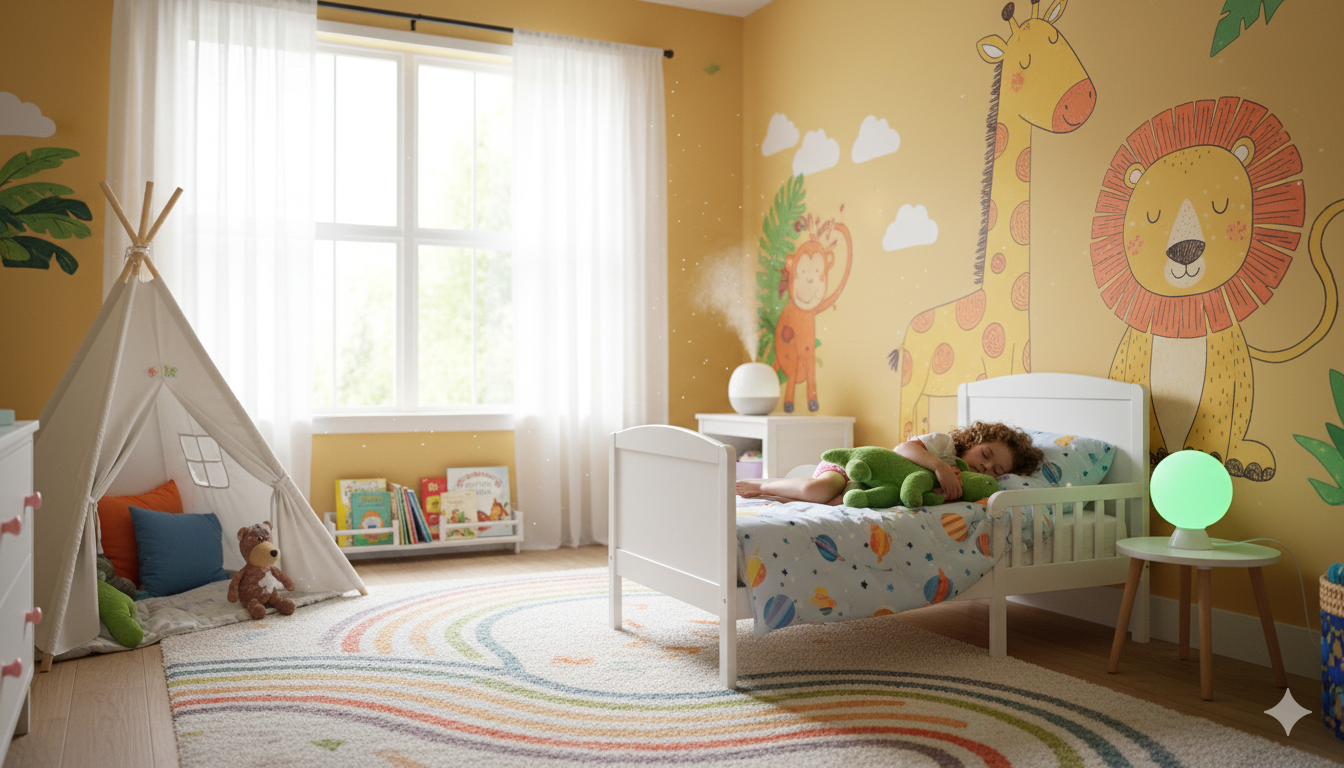
The right sleep environment can make the difference between peaceful nights and ongoing struggles. Here’s how to optimize your child’s bedroom for better sleep:
Room Setup Essentials
Darkness is Key: Use blackout curtains or room-darkening shades. Even small amounts of light can interfere with melatonin production. Consider covering LED lights from electronics.
Temperature Control: Keep the room cool—between 65-70°F (18-21°C). Toddlers sleep better in slightly cooler environments.
Noise Management: Use a white noise machine or fan to mask household sounds. Consistency is important—if you start with white noise, maintain it throughout the night.
Comfortable Bedding: Ensure the mattress is firm and comfortable. Use breathable, natural fiber sheets when possible.
Safety Considerations
- Remove pillows and loose blankets for children under 2
- Ensure the crib or toddler bed meets current safety standards
- Keep the room free of choking hazards and cords
- Consider a nightlight with red or orange light if needed—avoid blue light
Building Bulletproof Bedtime Routines
A consistent bedtime routine signals to your child’s brain that it’s time to wind down. The key is starting early enough and keeping it predictable.
The Ideal Timeline
60-90 minutes before bed: Begin wind-down activities 45-60 minutes before bed: Bath time (if part of routine) 30-45 minutes before bed: Quiet activities, stories 15-30 minutes before bed: Final preparations, tucking in Lights out: Consistent bedtime
Sample Bedtime Routine for Different Ages
For 2-3 Year Olds (30-45 minutes total):
- Cleanup toys together
- Bath (every other night) or wash hands/face and brush teeth
- Put on pajamas
- Read 2-3 short books
- Sing a lullaby or quiet song
- Tuck in with comfort object
- Brief back rub or quiet talking
- Lights out
For 4+ Year Olds (45-60 minutes total):
- Cleanup and prepare for tomorrow
- Bath/shower and dental hygiene
- Put on pajamas
- Read books (they may “read” to you)
- Quiet talking about the day
- Tuck in independently
- Brief check-in if needed
- Lights out
Common Routine Mistakes to Avoid
- Starting too late: Begin early enough that you’re not rushing
- Inconsistency: Weekend routines should be similar to weeknight routines
- Overstimulation: Avoid roughhousing, screens, or exciting activities
- Too complex: Keep routines simple enough to maintain when tired or traveling
Navigating Nap Transitions
The transition away from naps is one of the trickiest aspects of toddler sleep. Here’s how to handle it gracefully:
Signs It’s Time to Drop the Nap
- Takes longer than 30 minutes to fall asleep at naptime
- Nap time becomes a consistent battle
- Bedtime gets pushed very late (after 9 PM) because of napping
- Child is happy and functional without the nap
- Age 4+ and fighting both nap and bedtime
The Gradual Transition Approach
Week 1-2: Shorten nap by 15-30 minutes Week 3-4: Implement “quiet time” instead of nap every other day Week 5-6: Replace nap with quiet time most days Week 7+: Quiet time only, earlier bedtime
Making Quiet Time Work
Even when naps end, quiet time remains valuable:
- Same time and place as former nap
- 45-60 minutes of calm, independent activities
- Books, quiet toys, soft music
- Child stays in room/bed even if not sleeping
- Dim lighting
- No screens or stimulating activities
Troubleshooting Common Sleep Challenges
Early Morning Wake-Ups
If your child consistently wakes before 6 AM:
Environmental factors: Ensure room is dark enough, consider room-darkening solutions Bedtime timing: Counterintuitively, an earlier bedtime often helps Consistent response: Don’t rush in immediately—give them a few minutes Wake time routine: Keep mornings calm and quiet until an appropriate time
Bedtime Resistance and Stalling
When bedtime becomes a battle:
Check the basics: Are they getting enough physical activity during the day? Evaluate timing: Is bedtime too early or too late for their current needs? Limit choices: Offer simple options (“red pajamas or blue pajamas?”) rather than open-ended decisions Stay calm and consistent: Don’t negotiate or give in to stalling tactics Address fears: Take legitimate fears seriously and provide comfort
Night Wakings and Sleep Disruptions
For children who wake frequently:
Rule out medical issues: Consult your pediatrician about sleep disorders, allergies, or other health concerns Consistency is key: Respond the same way each time Comfort vs. dependence: Provide comfort without creating new sleep associations Environmental check: Ensure nothing in the environment is causing disruption
Sleep Regressions
Sleep regressions are temporary—usually lasting 2-4 weeks:
Common triggers: Developmental leaps, changes in routine, illness, new baby Maintain consistency: Stick to your established routines as much as possible Extra patience: Offer additional comfort without abandoning good sleep habits This too shall pass: Remember that regressions are temporary
The Role of Daytime Activities in Sleep Quality
What happens during the day significantly impacts nighttime sleep:
Physical Activity Requirements
Toddlers (2-3 years): At least 3 hours of physical activity throughout the day Preschoolers (4+ years): At least 3 hours of physical activity, including 1 hour of energetic play
Timing matters: High-energy activities should end at least 2-3 hours before bedtime.
Light Exposure and Circadian Rhythms
Morning light: Expose children to bright light (preferably natural sunlight) within the first hour of waking Daytime brightness: Spend time outdoors during the day when possible Evening dimness: Begin dimming lights 1-2 hours before bedtime Screen time limits: No screens within 1 hour of bedtime
Meal Timing and Sleep
Dinner timing: Finish dinner at least 2 hours before bedtime Bedtime snacks: If needed, offer light snacks 30-60 minutes before bed Avoid: Large meals, sugary foods, or caffeine close to bedtime Hydration balance: Ensure adequate daytime hydration while limiting fluids 1 hour before bed
When to Seek Professional Help
While most sleep challenges are normal and temporary, sometimes professional guidance is needed:
Consider consulting your pediatrician if:
- Sleep problems persist despite consistent routines for 4-6 weeks
- Child shows signs of sleep disorders (loud snoring, breathing interruptions, excessive daytime sleepiness)
- Sleep issues are significantly impacting family functioning
- You suspect underlying medical issues
- Child seems excessively tired despite adequate sleep opportunity
Signs of possible sleep disorders:
- Loud, persistent snoring
- Pauses in breathing during sleep
- Excessive daytime sleepiness despite adequate nighttime sleep
- Difficulty staying asleep throughout the night after age 3
- Sleepwalking or night terrors
Creating Your Family’s Sleep Success Plan
Every family’s sleep needs are unique. Consider these factors when developing your approach:
Individual Differences
Temperament: Some children are naturally good sleepers; others need more support Sensitivity: Highly sensitive children may need extra environmental considerations Activity level: High-energy children may need more physical activity during the day Flexibility: Some children adapt easily to changes; others need very consistent routines
Family Lifestyle Factors
Work schedules: Adapt routines to fit your family’s schedule while maintaining consistency Sibling considerations: Balance individual needs with family logistics Living situation: Apartment living may require different strategies than houses Travel and changes: Plan for maintaining sleep habits during disruptions
Conclusion: Building Healthy Sleep Habits for Life
Good sleep habits established during the toddler and preschooler years lay the foundation for lifelong healthy sleep patterns. Remember that developing these habits takes time, patience, and consistency.
The investment you make now in establishing healthy sleep routines will pay dividends in your child’s physical health, emotional regulation, behavior, and your family’s overall well-being. Every child’s sleep journey is unique, so trust your instincts while staying informed about best practices.
Sweet dreams are not just a wish—they’re an achievable goal with the right knowledge, consistency, and patience.
Quick Reference
Need a fast answer? Check our Sleep FAQ for immediate solutions to specific sleep questions.